
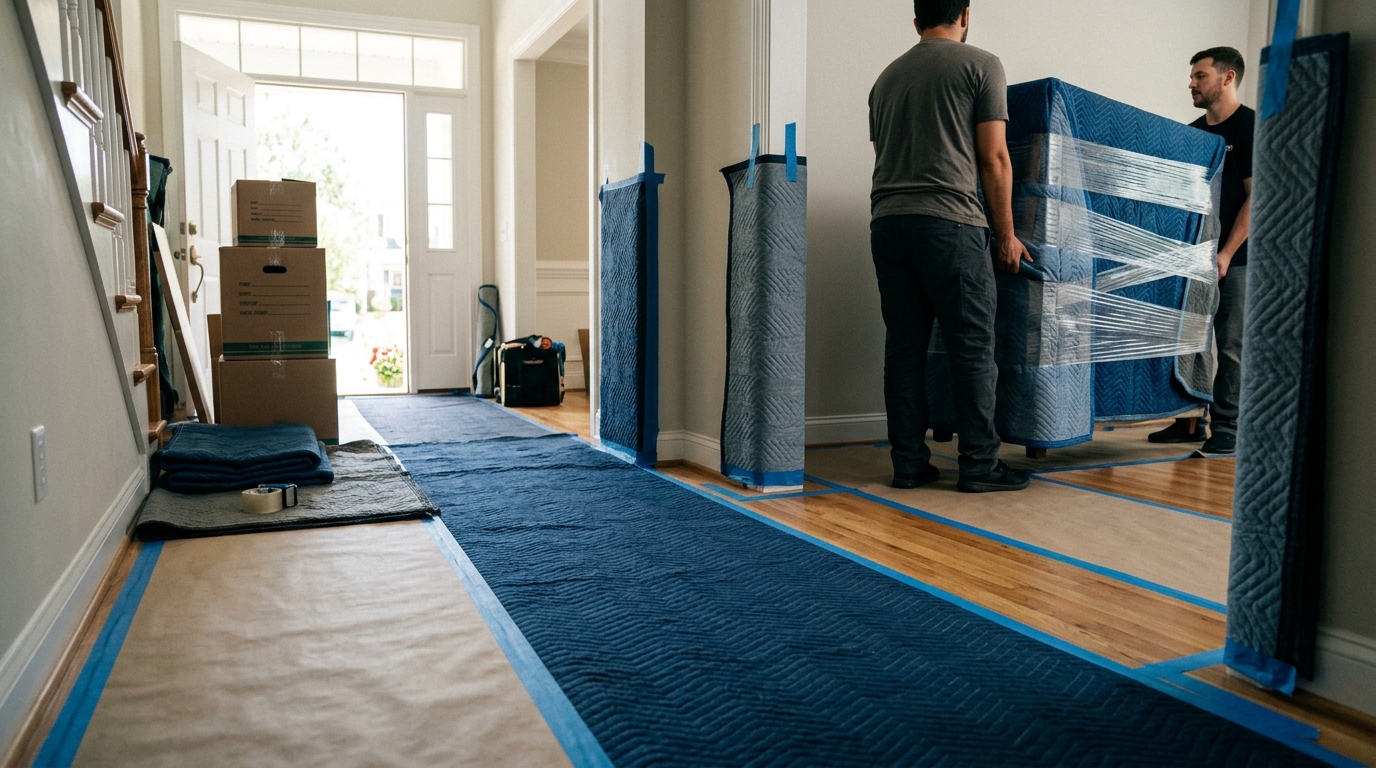
Protecting your home during a move is a critical step that prevents costly damage to your property and belongings. The Move Place, a trusted moving company in Dallas, TX, emphasizes careful loading and furniture protection to ensure your relocation is stress-free. By using the right materials and techniques, you can safeguard your floors, walls, and furniture from scratches, dents, and impacts. This guide outlines seven effective strategies to keep your home in pristine condition while your items are in transit.
1. Use Heavy-Duty Moving Blankets for Furniture
Wrap all furniture in thick, padded moving blankets to absorb shocks and prevent surface damage. Moving blankets are the first line of defense for your furniture. They cushion items against bumps during loading and unloading. The Move Place crews are trained to wrap furniture carefully, ensuring that corners and edges are fully covered. This simple step significantly reduces the risk of scratches and dents on your valuable pieces.
2. Apply Floor Protection Pads at Doorways
Place protective pads at doorways and tight corners to prevent scuffing on hardwood and tile floors. When moving large items through doorways, the weight of the furniture can easily scratch your floors. Using floor protection pads or cardboard at these choke points creates a barrier. This technique is especially important in Dallas homes with hardwood or polished tile. It ensures that the path from the truck to the room remains clean and undamaged.
3. Secure Walls with Corner Guards
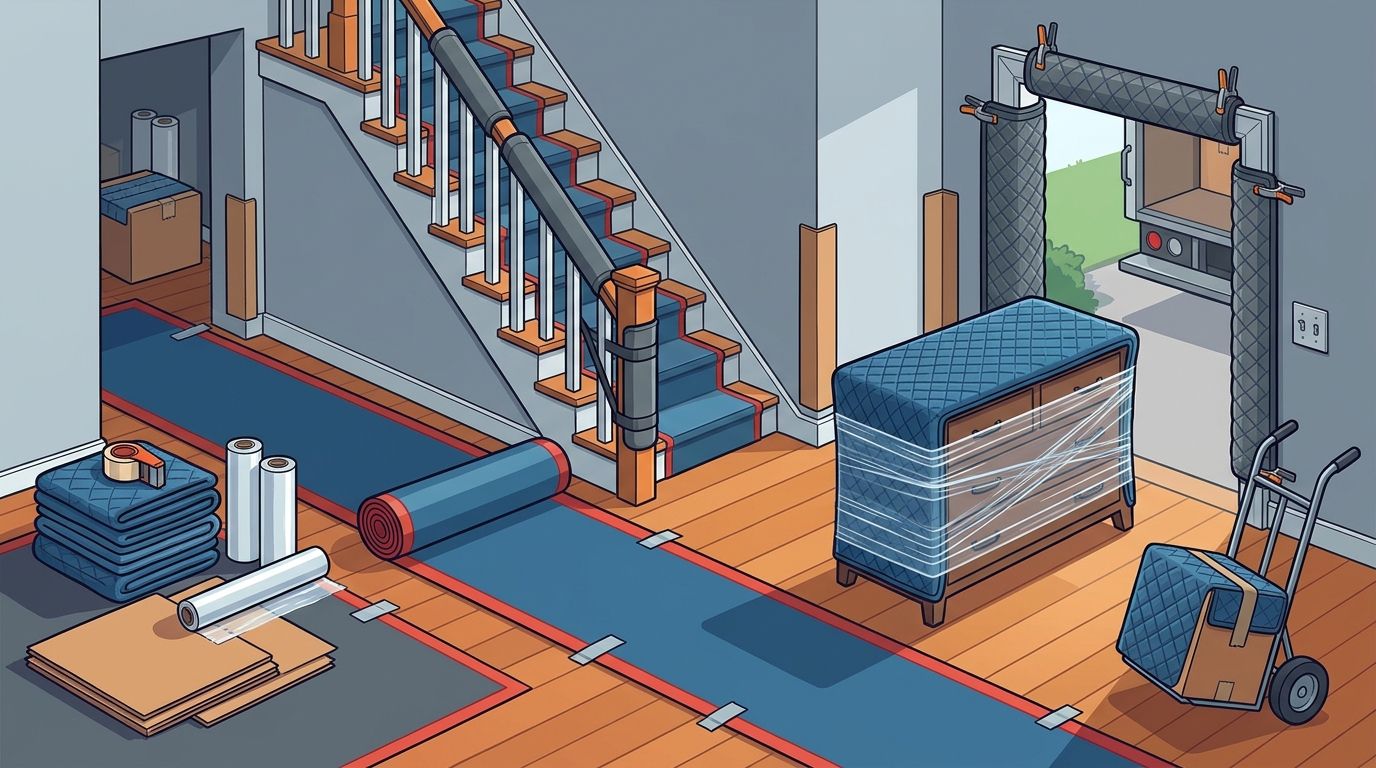
Install corner guards on walls to protect paint and drywall from impacts. Walls are vulnerable when movers navigate tight hallways or staircases. Corner guards provide a hard surface that absorbs the impact of furniture edges. This prevents gouges and paint chips that can be expensive to repair. By securing these guards in advance, you give your moving crew a safe path to follow.
4. Disassemble Furniture to Reduce Bulk
Take apart large furniture pieces to make them easier to maneuver and less likely to hit walls. Oversized furniture is the primary cause of wall and floor damage during a move. Disassembling beds, tables, and dressers reduces their footprint and makes them easier to control. The Move Place offers disassembly and reassembly services to ensure this process is done correctly. This approach minimizes the risk of accidental impacts in tight spaces.
5. Use Furniture Pads and Sliders
Attach furniture pads and sliders to the legs of heavy items to allow smooth movement across floors. Dragging furniture across floors is a sure way to cause damage. Furniture pads and sliders allow you to glide heavy items without lifting them entirely. This reduces friction and prevents scratches on your flooring. It also makes the moving process faster and safer for both the movers and your home.
6. Cover Staircases and Ramps
Protect staircases and ramps with durable materials to prevent wear and tear. Staircases are high-traffic areas during a move and are prone to damage. Covering the treads and rails with protective materials helps prevent scuffs and dents. This is particularly important for homes with multiple floors. By protecting these areas, you ensure that the structural integrity and appearance of your home remain intact.
7. Hire Professional Movers with Protection Expertise
Choose a moving company that prioritizes property protection and has experience with local homes. Professional movers like The Move Place have the expertise and equipment to protect your home effectively. They understand the specific challenges of Dallas homes and can adapt their techniques accordingly. Their commitment to careful loading and furniture protection ensures that your property is treated with the utmost care. This professional approach provides peace of mind and reduces the risk of damage.
Choosing the Right Protection Strategy
Frequently Asked Questions
What is the best material for protecting hardwood floors during a move?
Heavy-duty moving blankets and floor protection pads are the best materials for protecting hardwood floors. They provide a cushioned barrier that prevents scratches and dents. For extra protection, you can layer cardboard under the pads in high-traffic areas.
Do professional movers provide their own protection materials?
Yes, professional moving companies like The Move Place typically provide their own moving blankets, pads, and other protection materials. This ensures that the right tools are used for your specific items and home layout. You can also request additional materials if you have particularly delicate floors or furniture.
How can I protect my walls from damage during a move?
Use corner guards and wall protectors to shield your walls from impacts. These materials absorb the force of furniture edges and prevent paint chips and drywall damage. Place them at doorways, corners, and tight turns where furniture is most likely to hit the walls.
Is it necessary to disassemble furniture before a move?
Disassembling furniture is often necessary to reduce its size and make it easier to move through tight spaces. This process minimizes the risk of damage to both the furniture and your home. Professional movers can handle disassembly and reassembly, ensuring that your items are protected throughout the process.
What should I do if my floors or walls are already damaged?
If your floors or walls are already damaged, it is important to document the condition before the move. Take photos and note any existing damage so that you can distinguish it from new damage caused during the relocation. This documentation can be helpful if you need to file a claim or request repairs after the move. Learn more: Contact The Move Place.